“Dad, we’ve started a nature club at school,” Hannah informs me as we skiddle down the side of Whitbarrow on our Sunday afternoon walk.
“Oh, with which teacher?”
“There’s no teachers. It’s at playtime.”
“Who’s we then?”
“Me and some friends. One of my friends started it, she asked me if I wanted to be in it and I said yes.”
There’s been a lot in the press recently about the ‘problem’ of nature deficit disorder, of how disconnected we’ve become from the rhythms and wisdom of the natural world, and how important it is for kids development to experience a connection with nature. So I’m all for Hannah’s new club.
“So what do you do?” I ask.
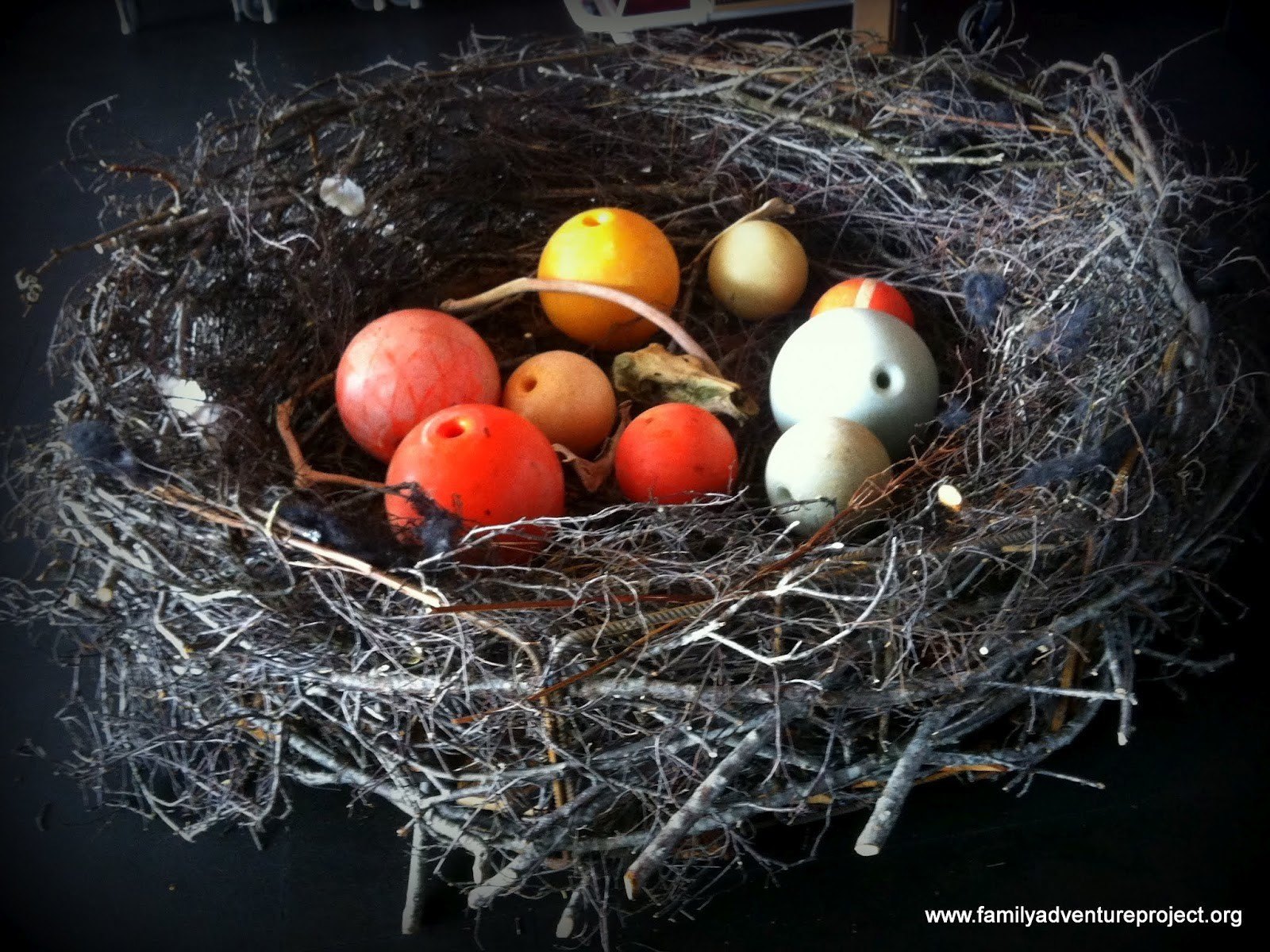
“Oh we make birds’ nests and things like that. On the school field.”
“What do you use?”
“Grass and sticks. And stones. Just like birds. But the wind blows away the grass. And the boys try to steal the stones.”
A birds nest of kinds… from our visit to Reykjavik Children’s Festival
I guess boys will be boys, that’s hard wired isn’t it? And we live in Cumbria so the elements are always going to be part of the equation. But they are just part of a wider pattern of challenges for my daughter and her friends. What with society’s current obsession with risk assessment and trying to minimise exposure to real or perceived danger. Everyone seems really busy trying to control kids and the environments they play in. Although there are a few voices of dissent, trying to warn us all about the dangers of not just the Last Child in the Woods, but the Last Child in the Street . Check out Tim Gill’s latest post.
“What else do you do in nature club?”
“We’re going to make a birds’ garden. For the birds to play in. But we’ve only just started it. ”
I’ve noticed encouraging signs of wider engagement and action lately around the ‘nature deficit’ issue, in particular from The National Trust. It’s great to see a national organisation weighing in on the issue, sponsoring research, making the case for change, committing resources and actively encouraging kids and parents to get outdoors, get active and do something more grounding and edifying than watching TV. I love their 50 things to do before you’re 11¾ and their call for ideas and action.
I picture the National Trust as a huge tree, providing accessible branches for kids to climb; a stable, sturdy influence over their outdoor games, nurturing them for life. But at the same time I fear consultations, top down policies, and strategies won’t solve this problem. Trees don’t grow from the top down. We need acorns pushing up. Lots of them.
“We’re going to make a hole for some water so the birds can drink, and plant a tree to grow more twigs” says Hannah.
I like the sound of nature club. It’s an acorn. It’s practical, local and comes from the kids. They don’t need a huge organisation to instill a love of nature in them; they just need the opportunity to explore and develop what’s already innate.
“And we’re growing dandelions and sunflowers”
“I’ve got some ideas for your nature club. Would you like to hear them?” I say.
“Not really Dad.”
“What about those books we’ve got at home on things to do in nature?”
We pause to blow on a dandelion clock. Hannah and her friends are like the seeds scattering in the wind. Given the right conditions they’ll sow, grow and flower on their own.
“Maybe. But I’ll have to ask my friends. We’ve already got a plan you see.”
Do you think kids have a natural capacity to connect with nature? Do we need top down strategies or lots of little acorns?
Zombie Run- Scare Yourself Fit No one can run away from a global pandemic, but… Read More
February's Light Up Cheltenham festival celebrates the town's classical Regency heritage by throwing a rainbow… Read More
Brutal but Beautiful Skiing in Flaine and the Grand Massif Half a century of piste… Read More
Biking the Camino de Santiago - With or Without kids Up for a cycle challenge?… Read More
Looking for things for kids in Manchester this half term? In the centre of metropolitan… Read More
Had enough of expensive European cities? For the last six months we've been focussing on… Read More